
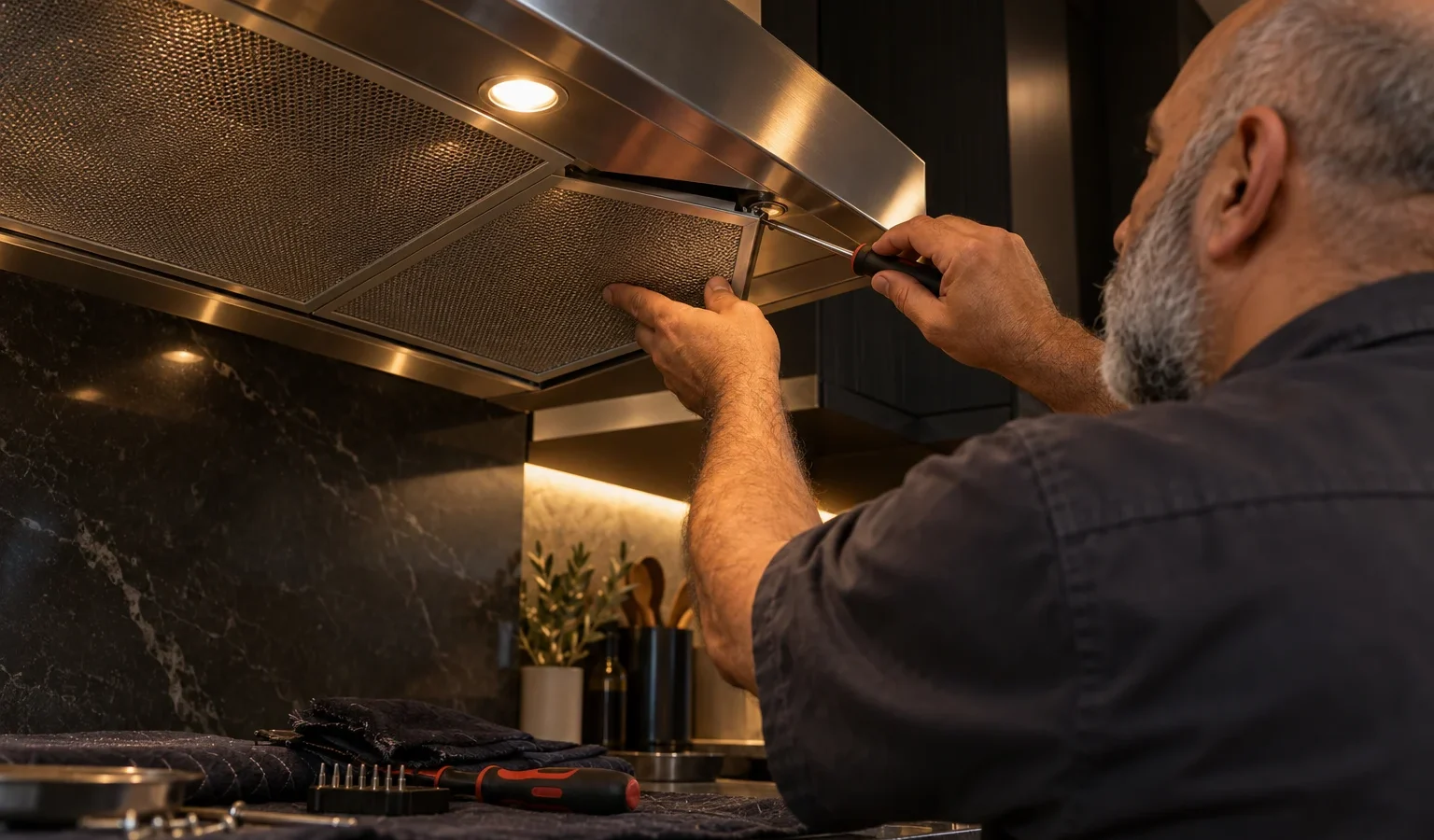

Specialized Dacor Appliance Repair in San Francisco
Mon–Sat: 8:00 AM – 7:00 PM
Every hood noise has a source. Rattles, humming, squeals and whistling each point somewhere different, and some are simple to sort out from the kitchen floor.
Dacor repairSan Francisco & the Bay Area
A new noise from the hood is easy to ignore until the day it drowns out the television. The good news is that sounds are informative. A rattle is a different problem from a squeal, and a whistle is a different problem from a drone. Describing the sound well can save a visit from becoming a guessing exercise.
Something is loose. Candidates include a filter that has shifted in its frame, a trim piece, a mounting screw that has worked loose over time, a duct joint that vibrates against the cabinet or an unbalanced blower wheel. Rattles that change with fan speed are often loose parts. Rattles that appear only at high speed hint at a wheel that has collected uneven grease or has bent.
The motor may be struggling. Aging bearings, a weakening capacitor or a motor that is slowly overheating can all produce a deeper drone. A hum that appears even when the fan is off may come from the control or a transformer.
This usually means a bearing is failing or a rotating part is touching a fixed one. Do not leave a grinding hood running. Continued use can seize the motor and, in the worst case, overheat it.
That is usually air, not hardware. A partly blocked duct, a damper that is stuck half-open, a gap around the duct joint or a filter that does not seat can make the airflow whistle. In island hoods with long duct runs, a small leak or crimp can produce a steady note that rises with speed.
A rhythmic tick that follows the rotation points to something in the blower wheel, such as a lump of dried grease or a foreign object. A thump when the fan starts or stops can come from a back-draft damper slapping open and shut.
Intermittent noise deserves its own mention. A hood that is quiet in the morning and loud in the evening may be responding to temperature: metal expands as the cooktop heats the canopy, and a loose bracket starts to tick. A hum that appears only when the oven below is running can point to heat reaching the controls. A whistle that comes only on windy days is an exterior vent matter, not a motor problem. Note when the sound appears, what else is running and what the weather is doing. That pattern is often more telling than the sound itself.
It also helps to know that hoods get louder as they get dirtier. A blower wheel coated with a layer of grease moves less air for the same effort, so the motor works harder and the note rises. If the sound crept up gradually over many months, cleaning and inspection usually come before any replacement.
Do not tighten screws inside the housing, lubricate the motor with oil sprays or reach into the blower while the hood is powered. Oil on a motor attracts dust and can make things worse. And do not run a squealing hood for long to see whether it settles.
Where the hood vents makes a difference. A wall hood on a short exterior run is generally quieter than one with a long duct, several elbows and a rooftop cap. An island hood hangs from a stem or a ceiling frame, and that frame can amplify vibration into the ceiling. A hood inside a custom cabinet enclosure may rattle against its surround. Downdraft vents, such as the unit on the Dacor MRV3015ERS repair page, have their own motion and ducting concerns that differ from overhead styles.
Older hoods also have older motors. The Epicure models on the Dacor EH30 repair page, for example, may be in service for many years, and bearings and capacitors simply wear. We read the label first, usually behind the filters or inside the canopy, then plan the diagnosis around that exact unit.
If the noise continues after filters are seated and the exterior is checked, or if it changes character, book a visit. We start by reproducing the sound at each speed, then inspect the blower wheel and motor, then the duct and damper. A written estimate comes before any work, and nothing is repaired without your approval.
The Dacor range hood repair page explains the visit, and the Dacor range hoods guide covers the lineup and the usual model label spots. If the fan has stopped altogether, see Dacor range hood fan not working.
Higher speed increases vibration. A loose filter, an unbalanced wheel or a loose duct joint often shows itself only at the top speed.
A rattle is mostly a nuisance. A grinding, squealing or burning-smelling hood is different: switch it off and book a visit.
Yes. Grease builds up unevenly on the blower wheel and unbalances it, which produces vibration and droning. Cleaning filters regularly helps.
A stuck exterior flap or a gap around the duct can let wind and airflow whistle through. Checking the visible vent cap is a sensible first step.
The model number, the sound, the speed where it occurs, how long it has been happening and what changed before it began.
Share a few details and we’ll confirm an appointment. Prefer to talk? Call us and we’ll help right away.