
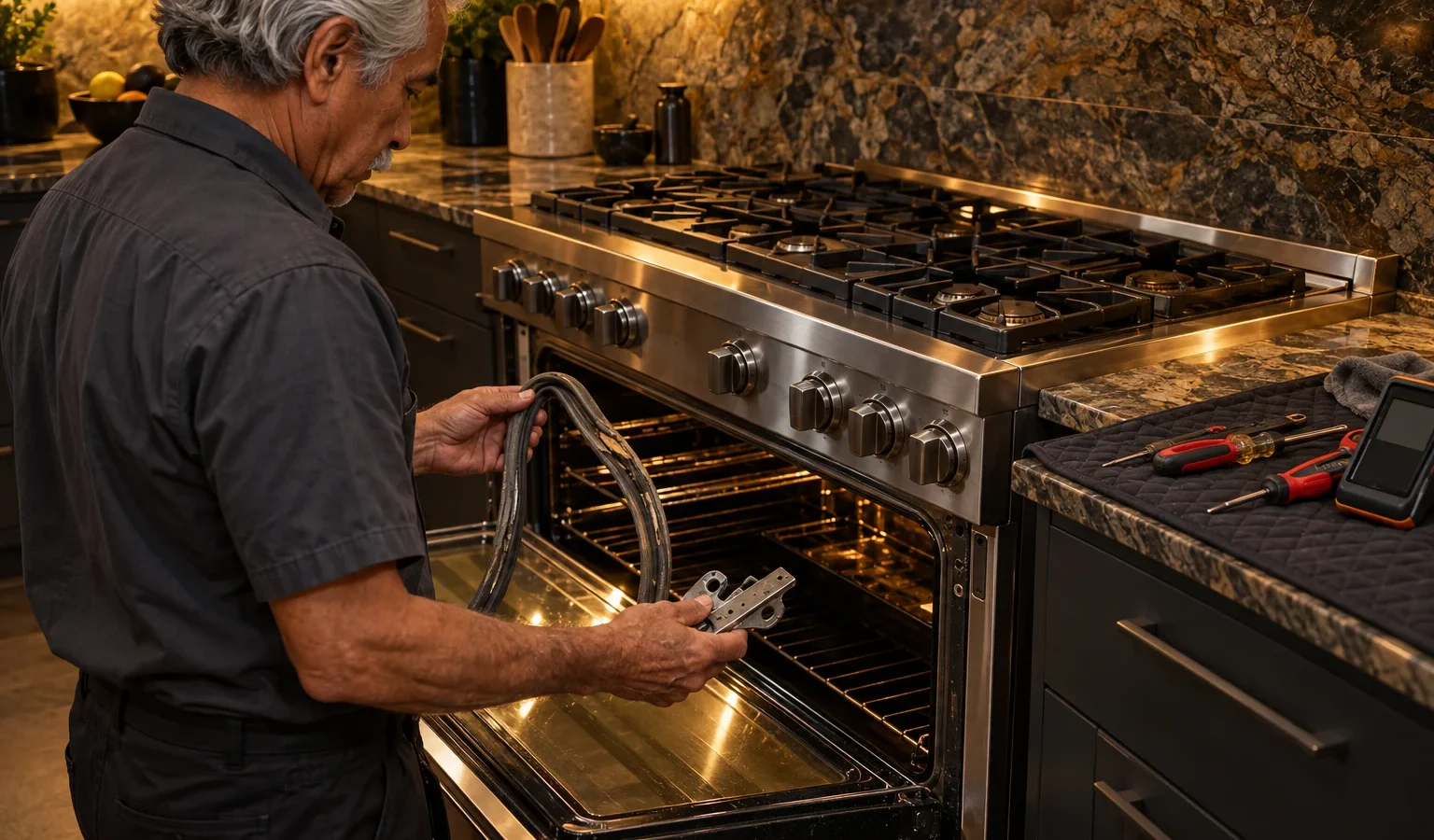

Specialized Dacor Appliance Repair in San Francisco
Mon–Sat: 8:00 AM – 7:00 PM
For a built-in Dacor, replacement often means a remodel, not just a swap. Here are the factors that matter and the questions to ask before you decide.
Dacor repairSan Francisco & the Bay Area
When a premium appliance breaks, the first reaction is often to start shopping. For a built-in Dacor, that reaction skips a lot. A replacement has to fit the cutout, match the cabinetry, meet the gas or electrical connections and sometimes change the whole look of the kitchen. The question is not only whether the old unit is fixable, but what the alternative asks of you.
A symptom alone does not tell you the size of the problem. A refrigerator that is warm could have a blocked vent, a failed fan or a sealed-system fault, and the decision looks very different for each. A cooktop with an error code could need a sensor, a connection or a control board. The only way to know is to have the fault found. We diagnose first, explain what we found in plain language and write up an estimate. You decide, and nothing is repaired without your approval.
Bay Area kitchens are often remodeled to a tight design, with stone, tile and custom millwork around each appliance. In a flat or condo, access may include stairs, elevators and building rules about work hours. A new unit that is a half-inch off can mean cutting stone or rebuilding a panel. That does not mean you should never replace, but it does mean you should compare the full job and not just the appliance.
Gas appliances add another layer, because a new range or cooktop means checking connections, shutoffs and ventilation. A hood that serves it may need to match, which is a reason to read Dacor range hood repair before you decide on the cooktop beneath it.
Keep using the appliance only if it is safe. Stop if there is a gas smell, burning smell, sparks, water near electrical parts or a breaker that keeps tripping. Move food from a warm refrigerator and avoid using a cooktop that behaves unpredictably. Photograph the model label and the display so that you have the details when you compare options. If you need help, how to find your Dacor model number shows where the label usually is.
After diagnosis, we tell you what is wrong, what the repair would involve and whether we would repair it if it were ours. We do not push a repair on a unit that is past sensible help, and we do not talk you into replacement when a fix is available. The estimate is in writing, so you can show it to a designer or contractor.
Pick the page that matches the appliance: Dacor refrigerator repair, Dacor range repair, Dacor wall oven repair or Dacor dishwasher repair. If the problem started with a code on the display, Dacor error codes explained helps you describe it.
If you are working with a kitchen designer, share the diagnosis before any choices are made. Designers can tell you whether a replacement would line up with the cabinetry, the panel fronts and the ventilation plan. Contractors can tell you what a different cutout would involve. Ask for specifics about how the new unit would be installed, and compare that with the repair as a complete job. Often the repair is the smaller project, and sometimes it is only a stopgap. Knowing which one it is lets you plan instead of reacting.
Whatever you choose, keep the model number, the written diagnosis and the estimate together. They are useful for the next decision, whether that is a repair years from now or a replacement.
Get a diagnosis first. Once the fault is named and the estimate is written, you can weigh it against the condition of the appliance and the work a replacement would involve.
Often, yes. Many older Dacor units are still repairable, though parts availability depends on the model. A technician can tell you what is realistic.
It can. A new unit with different dimensions may require cutting or rebuilding surrounding cabinetry, and panel-ready fronts may need to be redone.
We will say so. You will have a written diagnosis you can use when you talk with a designer or dealer about a replacement.
No. You get the findings and an estimate, and nothing is repaired unless you approve it.
Share a few details and we’ll confirm an appointment. Prefer to talk? Call us and we’ll help right away.