

Specialized Dacor Appliance Repair in San Francisco
Mon–Sat: 8:00 AM – 7:00 PM
A downdraft vent that stays flat behind the cooktop is usually a lift, sensor or control problem, sometimes just an obstruction. This is how to sort out which one.
Dacor repairSan Francisco & the Bay Area
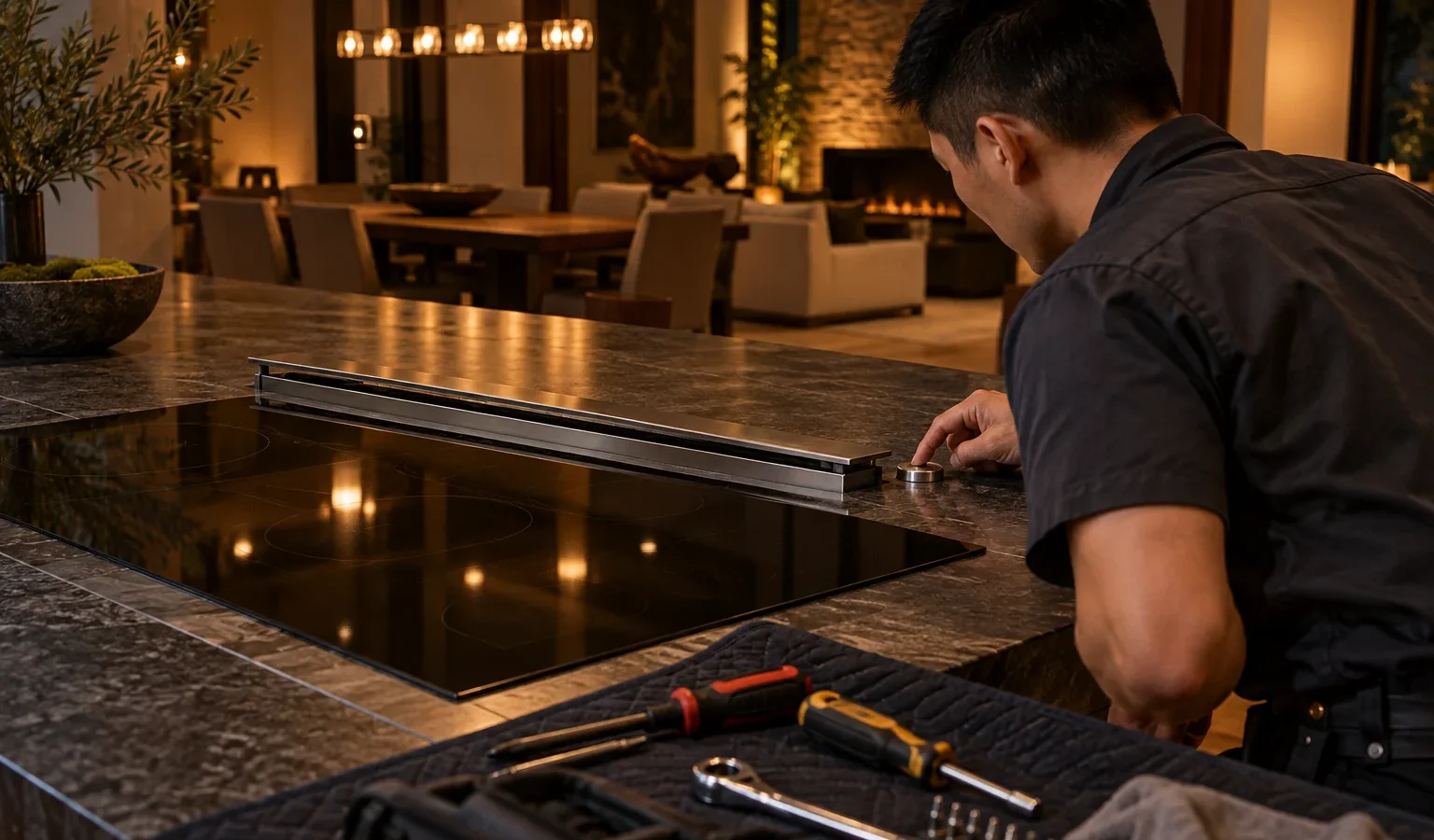
A downdraft vent lives out of sight until you cook. Press the control, and a slim panel is supposed to slide up behind the cooktop, catching steam and smoke at the surface. When it stays down, the kitchen fills with whatever the pan is making, and the owner is left wondering whether the motor has died, something is jammed or the button itself has gone quiet.
The rising section is a moving assembly. A small motor drives it along a track or a set of guides, and limit switches tell the control when the panel has reached the top and the bottom. The blower is separate and often starts only after the control believes the vent is up. So a vent that will not rise may look as if it has no airflow, while the blower itself is perfectly healthy.
Because the assembly is tucked behind or beside the cooking surface, grease, spilled liquid and the occasional dropped utensil can end up in the exact place the panel needs to travel. Houses with a rangetop or cooktop in a kitchen island often have a downdraft because there is no wall for a hood, so this symptom shows up most often in open-plan and island layouts.
A lid, a cutting-board scrap, a spoon rest or a layer of baked-on residue can stop travel. The motor may hum, strain or click when you press the button, and the panel moves a little or not at all. This is the cause you can often confirm yourself from above.
The motor, the drive parts, the guide rails and the limit switches all age. Heat, moisture and years of use take their toll, particularly in older installations. Symptoms include a slow rise, a rise that stops partway, a grinding noise, or a panel that goes up crooked.
If the control panel does not respond at all, if the display is blank, or if the vent responds only to some buttons, the problem may be the keypad, the connection between the control and the lift, or the board that manages both. A power interruption in the building can leave the control confused until it is reset.
That is the end of the safe list. If the panel stays down, do not tug it up by hand. Forcing a lift against its own motor can strip the drive parts and bend the guides, turning a modest repair into a much larger one.
Downdraft placement matters. A vent set behind a freestanding range or a slide-in cooking surface sits near the cabinet back and the wall, and it depends on a clean path for ducting under the floor or through the cabinet. A vent in an island has its duct run through the base cabinet, and any kink, loose joint or crushed section changes how the blower behaves after the lift is fixed.
Flush-fit stone or tile surrounds also matter. Some installations leave only a narrow gap for the panel, and a countertop that has settled, been replaced or been sealed with a thick bead of caulk can pinch the travel. If the vent stopped working after a remodel or a countertop repair, tell us. That timing is a strong clue.
Your model number lets us look up the right assembly. A downdraft vent such as the one covered on the Dacor MRV3015ERS repair page, or the Heritage downdraft hood on the Dacor HRV46S repair page, may be built differently from a standard wall hood, so we confirm the exact unit before ordering anything.
You can cook with the vent down only if the room is open and the burners are low. Gas cooktops produce combustion byproducts, and a pan of hot oil without extraction fills the room with grease that settles into cabinets and ceiling surfaces. If you cook on gas and the vent will not lift, open a window, keep the heat modest and book a visit. If you smell gas at any point, leave the building and call the gas utility or 911 from outside without touching a switch.
We begin by asking when it last worked and what changed. Then we examine the travel path, test the lift motor and the limit switches, and check the control signal. If the lift is sound, we move to the blower and the ducting. You receive a written estimate after the diagnosis, and nothing is repaired until you approve it.
The full Dacor range hood repair page covers ventilation of every style, and the Dacor range hoods guide lists the lineup. If the blower, rather than the lift, is your concern, the post on a Dacor range hood fan not working will help.
A hum usually means the motor is getting power but cannot move the panel, either because something is blocking the track or because the drive parts have worn. Stop pressing the control and book a visit.
Yes. A thick layer of baked-on grease can add enough drag to stall the lift or make it stop partway. Cleaning the visible area is a reasonable first step, but do not spray liquid into the slot.
No. The motor and guides are not designed to be forced, and doing so can damage them. Leave the panel as it is.
It can. A tight cut, a thick sealant bead or a slight shift in the surface can interfere with the panel travel. Mention any recent kitchen work when you call.
Give the model number, what the vent did when you pressed the control, any sound or code, and whether anything changed in the kitchen before the problem began.
Share a few details and we’ll confirm an appointment. Prefer to talk? Call us and we’ll help right away.