
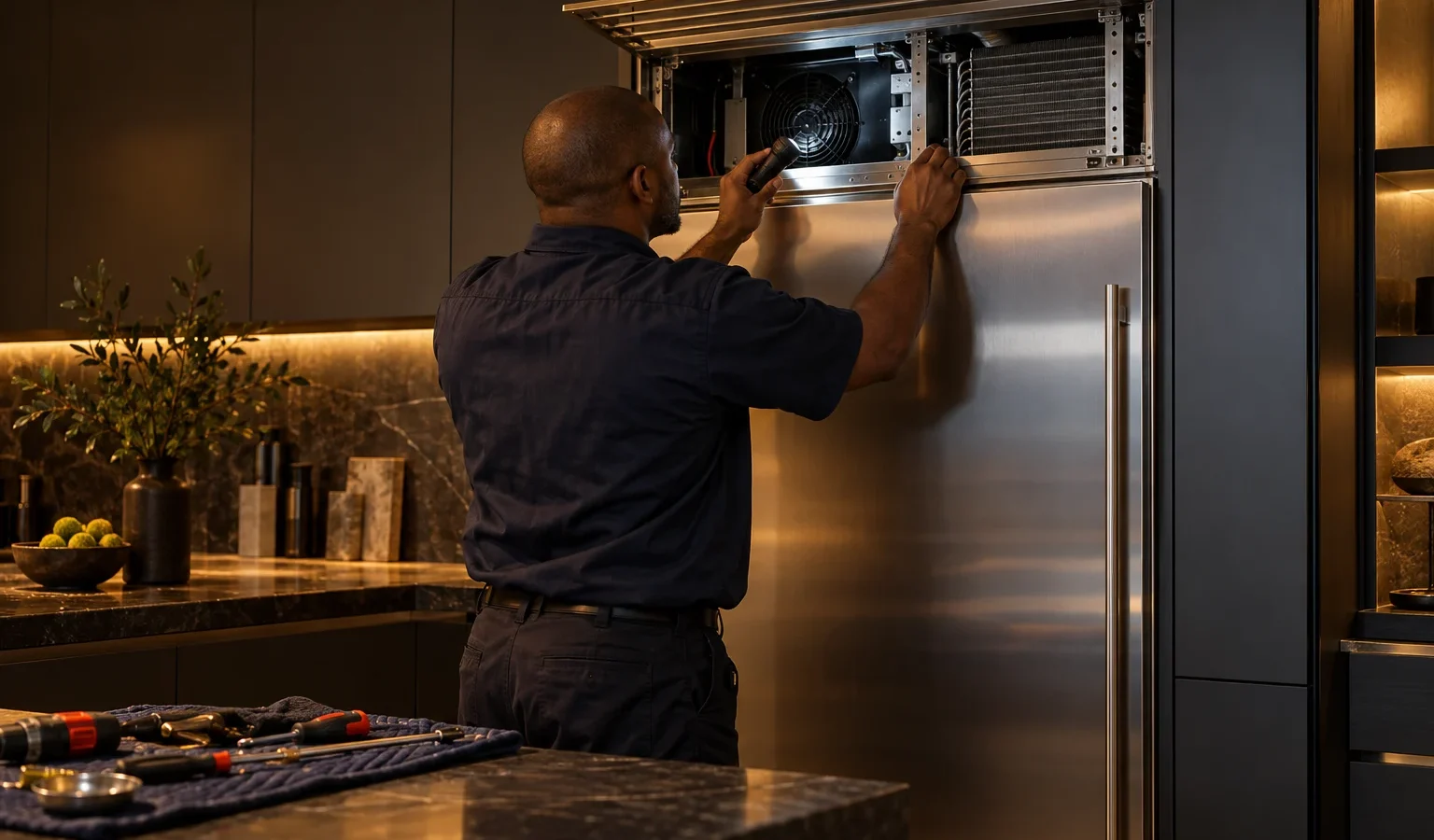

Specialized Dacor Appliance Repair in San Francisco
Mon–Sat: 8:00 AM – 7:00 PM
Humming, buzzing, rattling and clicking each point to a different part of a refrigerator. Learn which sounds are normal and which call for a visit.
Dacor repairSan Francisco & the Bay Area
Refrigerators are never silent. Compressors start and stop, fans move air, defrost cycles add ticks and pops, and ice maker valves clunk. A built-in Dacor sitting between tall cabinets can seem louder than a freestanding one because the surrounding panels catch and carry vibration. The question to ask is not whether it makes noise, but whether the noise changed.
These come and go on a pattern. If the noise matches that pattern and the food is cold, there is usually nothing to fix.
A buzz that rises when the unit runs and falls when it stops can come from the compressor area, or from a component shaking against the cabinet or a loose panel. Check whether the refrigerator is level and whether it touches a neighboring cabinet. Sometimes a folded towel behind the unit is all that is rubbing.
Rattling is usually mechanical looseness. Items stored on top of a column unit, bottles clinking on a door shelf or a drawer riding off its track all make a convincing noise. Remove what you can, then listen again.
A fan blade brushing against frost, a bit of ice or a stray object produces a scrape. If the sound comes from inside the freezer wall and is accompanied by weak cooling, the evaporator fan may be hitting frost buildup, which suggests a defrost problem. Read Dacor refrigerator warm freezer cold for how that develops.
A steady click, a pause, and another click can mean a component is trying to start and shutting off. If the refrigerator also stops cooling, treat this as a service issue and read Dacor refrigerator not cooling.
Water heard dripping inside the cabinet may be defrost water running to its drain. If you also find water on the floor or under the crisper drawers, the drain path may be blocked or frozen.
Do not open the back panel, probe the fan with a tool or spray lubricant into the freezer walls. Do not tilt a built-in refrigerator out of its opening to look behind it; the weight and the water line make that unsafe. If you smell something burning or see sparks, turn the power off at the breaker and call.
Dacor refrigerators in San Francisco often live in flush cabinetry installed on older floors that are not perfectly level, especially in row houses and hillside homes. A slightly tilted opening can make a fan housing or a tubing line touch the cabinet, so a noise appears months after an install. When a technician slides the unit forward, the first thing they look at is whether it was ever set level and whether airflow around it is clear. Shims and leveling feet are a normal fix, but ruling out a failing fan or compressor mount comes first.
Book when the sound is new, getting louder, repeating in a pattern or paired with warm food, ice buildup or a unit that runs without stopping. A noise by itself, with normal cooling, can wait for a convenient appointment. A noise paired with a burning smell cannot.
We diagnose first, explain what we found and put a written estimate in your hands before anything is repaired.
The Dacor refrigerator repair page describes how visits run, and the Dacor refrigerators guide covers the lineup. A column unit such as the Dacor DRR24980 repair page, or a side-by-side like the Dacor DYF42BSIWS repair page, may show up with the same complaints.
Noise is hard to describe over the phone, so give yourself some evidence. Record a short clip with your phone near the unit, then another with the freezer door open. Note whether the sound follows the compressor cycle, whether it began after a recent move, a remodel or a power cut, and whether anything else changed at the same time, such as warmer food or a fuller ice bin. A technician who has heard the sound in advance arrives with a shorter list of suspects.
Yes. A steady low hum while the cooling system runs is normal. It becomes a concern when it grows louder, buzzes or comes with poor cooling.
Many refrigerators switch the fan off when the freezer door opens. If the noise stops with the door, the fan area is a likely source.
Yes. An unlevel unit can touch cabinetry or vibrate against its surround. Leveling and clearing contact points often quiet it.
If there is a burning smell, sparks or smoke, switch off the breaker. For an ordinary loud noise with normal cooling, you can keep running it until the visit, but move perishables if cooling weakens.
Describe the sound, when it happens and whether cooling has changed. A short phone recording and the model number help us bring the right parts.
Share a few details and we’ll confirm an appointment. Prefer to talk? Call us and we’ll help right away.