

Specialized Dacor Appliance Repair in San Francisco
Mon–Sat: 8:00 AM – 7:00 PM
When the freezer stays frozen but the fresh-food side drifts warm, the problem is usually how cold air travels between the two. Here is how to sort the causes in order.
Dacor repairSan Francisco & the Bay Area
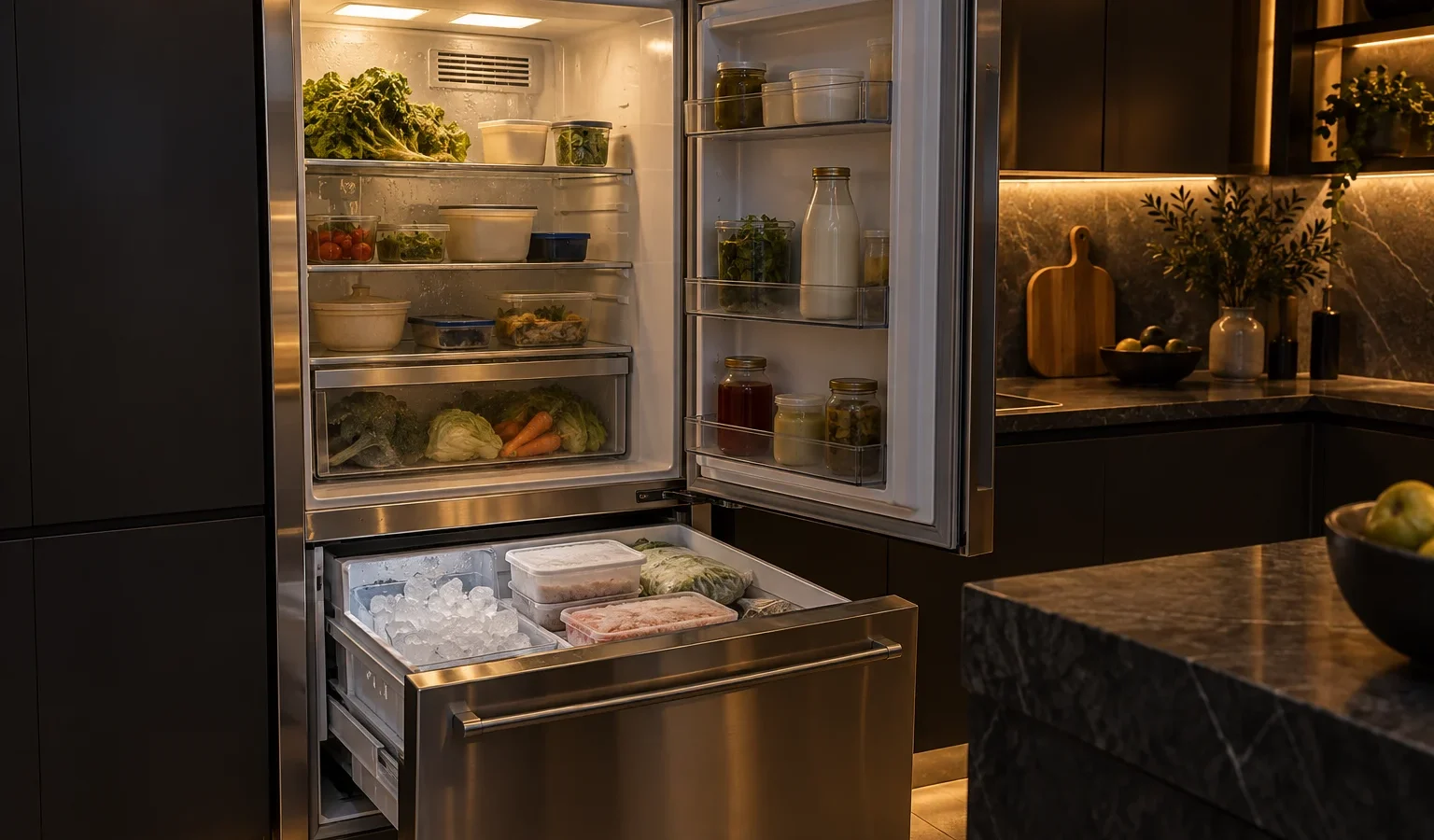
You open the door to find ice cream hard as a brick and the milk lukewarm. That mismatch tells you something useful. In most built-in and freestanding Dacor refrigerators, a single cooling system makes the cold, and a fan and an air door then share it between the freezer and the fresh-food compartment. If the freezer is fine, the system is making cold air. The question is why not enough of it reaches the other side.
Think of the freezer as the source and the refrigerator side as the customer at the end of a duct. A few things can starve that customer.
Each of these produces the same complaint, which is why a symptom alone cannot name the part. A technician separates them by looking at frost patterns, listening for the fan, and watching how the air door behaves.
Do not turn the freezer setting down to push more cold toward the other side. It rarely helps and can make a frosted coil worse. Do not remove the interior panels, pry at the fan housing or pour hot water into the freezer to melt frost. Hot water can run behind the panel into wiring and the defrost parts, turning a service call for one fault into a service call for several.
Food safety comes first. If the fresh-food side has been warm for a while, move perishables to a cooler or a working refrigerator and use your own judgment about milk, meat and leftovers.
A built-in Dacor in a San Francisco flat or condo often sits flush with cabinetry, with trim on both sides and a panel-ready door. Airflow around the cabinet matters. Dust that collects behind a kick plate, or a box left on top of a column unit that closes off the top gap, can push the system to run hard and still fall behind. Mention any recent remodel or cabinet change when you book, because tight surrounds change how a technician reaches the back of the unit.
Older Dacor refrigerators from the Epicure and Preference era are still running in many Bay Area homes. They tend to show the same split symptom for the same reasons, and age mostly changes which replacement parts have to be located before a repair can be finished.
Book once you have cleared the vents, confirmed the doors close properly and seen the split return after a power reset. Also book sooner if you find ice formed inside the fresh-food compartment, water pooling under the crisper drawers or a freezer that is slowly losing its own temperature. Those patterns suggest the problem is growing.
The visit starts with a diagnosis. We check how the coil, fan and air door behave, tell you what we found and write up an estimate. Nothing is repaired until you approve it.
Our Dacor refrigerator repair page explains how a visit runs, and the Dacor refrigerators guide covers the lineup and where to find the model label. If the whole cabinet is warm rather than just one side, read Dacor refrigerator not cooling. For a bottom-freezer unit such as the Dacor DYF30BFBSR repair page, or a French-door unit like the Dacor DRF36530 repair page, the symptom reads the same way. Have the model number ready, and if you are not sure where it is, how to find your Dacor model number walks through the usual spots.
The freezer sits closest to the cooling coil, so it keeps its temperature longest when airflow drops. The fresh-food side relies on a fan and an air door to receive its share, and when either one fails, that side warms first.
Yes. Food pushed against an air outlet can block the stream of cold air entirely. Clear the vents and give the cabinet a little time to recover before assuming a part has failed.
It is safe electrically, but food in the warm compartment is not. Move perishables to a cooler place and leave the freezer closed as much as you can.
Unplugging it and emptying it will not fix a defrost fault, because the frost returns. Avoid heat guns, hair dryers and sharp tools near the back panel. A technician can find out why the frost formed.
It helps. The model number tells us which parts and wiring the unit uses, so having it ready makes the first visit more useful.
Share a few details and we’ll confirm an appointment. Prefer to talk? Call us and we’ll help right away.