Steam and Combi Ovens
Dacor combination and steam ovens in San Francisco kitchens: the 30-inch models we list, the C-10 sensor code, water-path symptoms and safe…

Specialized Dacor Appliance Repair in San Francisco
Mon–Sat: 8:00 AM – 7:00 PM
Steam, drain, heat or sensor: we work out which system failed and tell you before any repair begins.
Dacor repairSan Francisco & the Bay Area
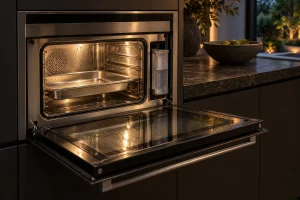
A Dacor steam or combination oven is a different animal from a regular wall oven. It adds water, a steam path and a drain to the usual heating system, and in a combi unit it can also bring microwave energy into the cavity. When one fails, the cause may sit in the heat, the water or the electronics. We diagnose and repair Dacor steam and combi ovens in San Francisco and the surrounding Bay Area.
Steam ovens draw water, turn it into vapor and then clear what remains. A cavity with standing water, a unit that refuses to start a steam cycle, or a drain that never empties each point at a different part of the water path. In San Francisco and the Bay Area, mineral content in tap water can leave scale on steam components over time, so a unit that worked well for years may begin to struggle.
Convection heat, a steam generator and, on combi units, microwave function all work separately. A combi oven that steams but does not heat, or heats but does not steam, narrows the diagnosis right away.
Temperature, steam and cooking sensors tell the control what is happening in the cavity. If one reports something impossible, the oven stops the cycle. Touch boards and main boards can lose contact with each other and cause blank screens or dead keys.
A door that is not seated correctly may stop a cycle from starting. A cooling motor that struggles can trigger a shutdown to protect the electronics.
Two code families are relevant here. The first is specific to the combi models:
The second set is listed on the wall oven code pages, and the meanings below apply to the combi ovens that those pages name:
The article on Dacor combination oven error codes goes through each in plain language. A code points us toward an area; the diagnosis confirms it.
A steam oven is built into cabinetry like a wall oven, but it brings plumbing considerations. Some units are fed from a water supply line, others use a removable reservoir, and the one in your kitchen determines where we look for a leak or a blockage. A drain that runs to a nearby waste line must stay free and sloped; a kink or a clog changes how the oven behaves.
Because the cavity holds steam, the door seal and the surrounding trim take more punishment than on a dry oven. Moisture can seep into cabinetry if a seal is damaged, so a visible stain or swelling next to the oven is worth mentioning when you book.
Stacking matters too. Many combi ovens are installed above a warming drawer or beside a standard oven in a tall cabinet bank, with limited clearance. Reaching the rear of a steam oven may mean sliding it out of its cutout, so the electrical connection, the water line and the cabinet floor all need attention before the work begins. In high-rise San Francisco condos, where a service elevator and building rules govern when a technician may arrive, we plan around those restrictions.
If you see sparks or smell something burning, turn the power off at the breaker. If water is escaping from the oven onto the floor, close the supply valve and stop using it.
Stop if the oven leaks, if the door does not close, or if a cooling fault repeats. Running a combi oven through a heating fault can damage the sensors that are otherwise inexpensive to replace.
Steam ovens give a lot of small clues before they stop completely. A cycle that takes longer than it used to, a faint smell of hot minerals, a cavity that is wetter than usual after cooking, or a display that flashes a message and then clears can all be early signs. If you notice any of them, make a note of the mode you were using, whether the oven was steaming, baking or combining, and what the oven did just before the problem. A technician can often tell from that account which system to test first, which saves time at the cabinet.
It also helps to know how the oven has been cleaned. Harsh cleaners left in the cavity, a cleaning pass that was interrupted, or a descaling routine that was skipped can all change how the water path behaves. Tell us what you used, even if it seems minor.
Dacor combi and steam ovens use different parts than a standard oven, and the three variants we list differ in their details. Check the oven frame for the label; our guide to finding your Dacor model number shows the usual spots.
You tell us the symptom and any code. We diagnose first, give you a written estimate and wait for your approval before we repair anything.
Read the Dacor steam oven guide for the lineup. The DOC30T977DS, DOC30M977DM and DOC30P977DS each have a page of their own.
Some condensation is normal. Standing water that does not clear may point to a drain problem, which we diagnose.
Do not assume so. Faults share sensors and controls, so use only what the oven allows and book a visit.
Mineral buildup can affect steam components over time, and a technician can see whether it is part of the problem.
Write it down, let the oven stop, and leave the food in only if it is safe to do so.
Yes, a worn seal is part of a steam oven diagnosis.
Dacor combination and steam ovens in San Francisco kitchens: the 30-inch models we list, the C-10 sensor code, water-path symptoms and safe…
Repair for Dacor gas, electric and induction cooktops and rangetops across San Francisco and the Bay Area, with diagnosis first and your…
Dacor dishwasher repair in San Francisco and the Bay Area for leaks, standing water, fill problems, heater faults and display codes in…
Repair for Dacor column freezers in San Francisco and the Bay Area: thawing food, heavy frost, drain ice and constant running, diagnosed…
Dacor ice maker repair in San Francisco and the Bay Area, covering empty bins, fused cubes, slow harvests and leaks from the…
Share a few details and we’ll confirm an appointment. Prefer to talk? Call us and we’ll help right away.