

Specialized Dacor Appliance Repair in San Francisco
Mon–Sat: 8:00 AM – 7:00 PM
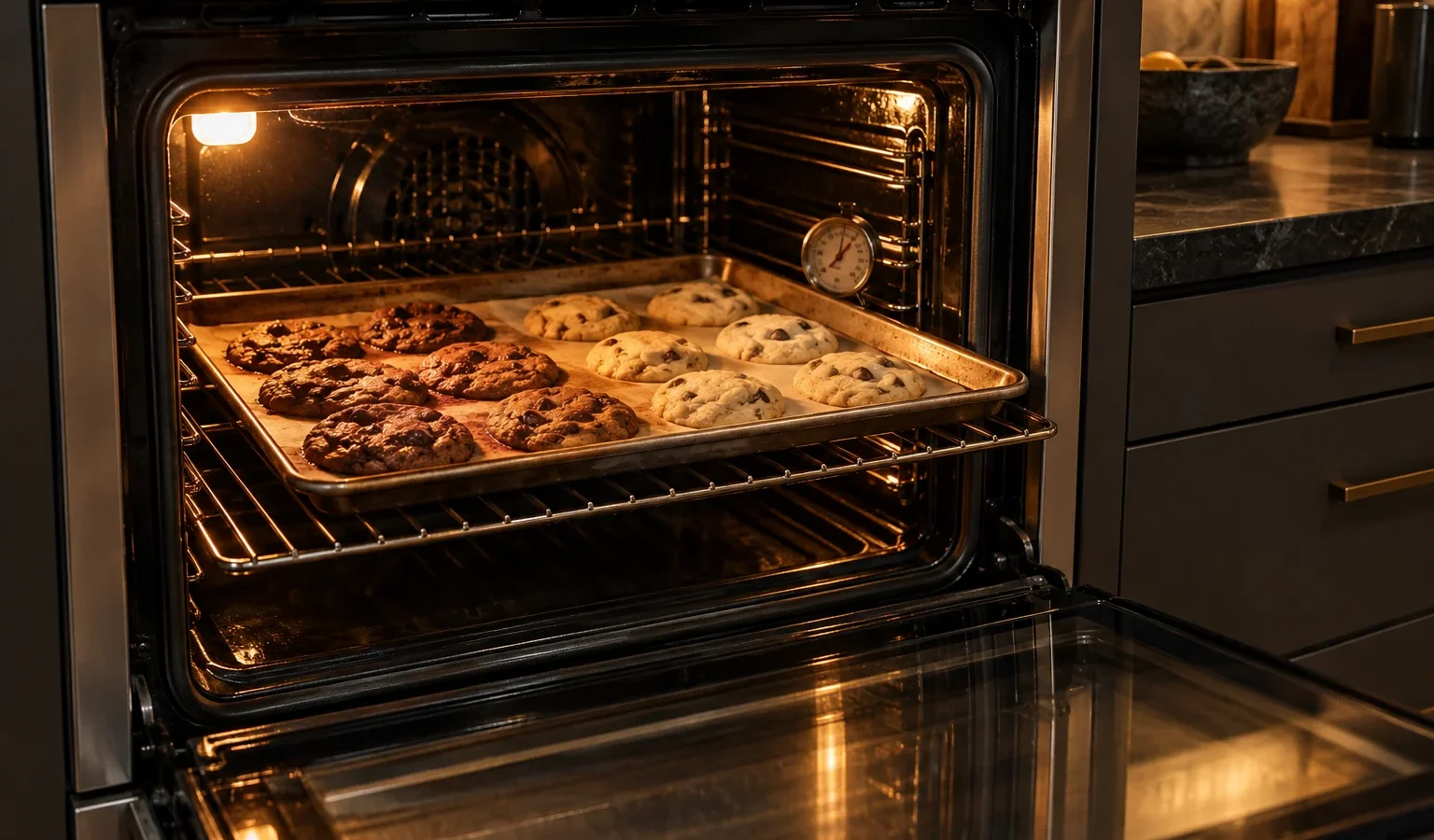
Burnt edges, pale centers or a roast that takes forever can all trace back to how the oven senses and holds heat. Here is how to narrow down the cause.
Dacor repairSan Francisco & the Bay Area
Few oven complaints are as slippery as temperature. The oven heats, the display shows a number, and yet cookies scorch on the bottom, a casserole stays pale or the same dish bakes differently from one week to the next. Because baking results depend on the whole system, from the sensor to the element to the air in the cavity, the cause is rarely obvious from the dish alone.
The control does not feel temperature. It reads a sensor, usually a probe inside the cavity, and compares that reading with your setting. When the reading and the real temperature agree, the oven bakes as expected. When the sensor drifts, ages or reports incorrectly, the control makes good decisions based on bad information. Some Dacor models use more than one probe and compare them, and a code appears when the readings disagree too much.
The other half is delivery. Elements cycle on and off, and in convection models a fan stirs the air. If an element is weak or a fan is slow, the oven may reach the number on the display and still bake unevenly.
This points to real heat above what the display claims, or to a broil element that is cycling when it should not. A sensor that reads low would cause exactly this: the control thinks the oven is cool, so it keeps heating.
This is the opposite problem. A sensor that reads high, a weak bake element, or a door that leaks heat will all slow cooking. Check the door seal and the gasket for visible tears, folds or flattening.
Uneven baking can come from a cooling fan that is running too hard, a convection fan that is not turning, or racks and pans blocking airflow. In a double oven, the lower oven is more prone to this because of how heat rises inside the cabinet.
An oven that swings widely, rather than holding steady, may have a relay that is chattering or a sensor with a loose connection. Intermittent faults are among the hardest to catch, which is why a written description helps.
Some Dacor controls report temperature faults directly. See Dacor wall oven U22 for a mismatch between two probe readings, Dacor wall oven U20 for cook over temperature, and Dacor wall oven C-30 for a board sensor that is open or shorted. These apply to specific control families, so confirm the model before reading too much into a code.
Do not pull the sensor out, bend it or touch it with anything. The probe is delicate, and a bent one can create its own false reading. Do not remove oven panels or reach into the cavity ceiling. And do not rely on a household thermometer left in a hot oven as proof either way; the placement and the thermometer’s own error make comparisons unreliable without proper instruments.
One more habit helps: keep a short log for a week. Note the rack, the setting, the dish and the result. A pattern, such as always dark on the left or always slow after a preheat, tells a technician far more than a general feeling that the oven is off.
A wall oven in a tight cabinet cutout that lacks proper airflow can run hotter in the electronics area, which affects cooling fans and sometimes the control. Older Dacor ovens built with earlier control generations, such as the Classic wall oven line on the Dacor ECD230 repair page or the Dacor ECS227 repair page, age in specific ways that differ from a recent flush installation. Parts like gaskets and sensors simply wear with time. If the oven shows no code and no obvious fault, ask about calibration; a technician can compare the actual cavity temperature with the control reading with proper tools.
If baking is consistently off, a code appears, or the oven swings in temperature, book a visit. We begin with the symptoms and any code, then check the sensor reading against the real cavity temperature, then the elements and relays, then the door seal and fan. A written estimate comes before any work, and nothing is repaired without your approval.
The Dacor wall oven repair page explains what a visit involves, and the Dacor wall ovens guide shows the lineup. If your oven will not heat at all, see Dacor oven not heating.
Some controls allow an adjustment of the displayed temperature, and that is a decision to make only after a technician has compared the real cavity temperature with the reading. Adjusting a failing sensor only hides the problem.
It can be rack position, a dark pan, a weak air path or a sensor that reads low. Try a different rack and a lighter pan first. If it persists across dishes, book a visit.
Yes. A seal that has torn or flattened lets heat escape, so the oven struggles to hold its setting and food cooks slowly.
Ovens cycle elements on and off, so small swings are normal. Large swings, or swings that ruin food, are not.
The model number, the setting you used, how the food turned out, any code and whether the problem is on all racks.
Share a few details and we’ll confirm an appointment. Prefer to talk? Call us and we’ll help right away.