

Specialized Dacor Appliance Repair in San Francisco
Mon–Sat: 8:00 AM – 7:00 PM
A wine column that stops chilling puts a collection at risk. Move bottles first, then use these checks to separate airflow, power and cooling-system problems.
Dacor repairSan Francisco & the Bay Area
A wine cooler that no longer cools is rarely a small problem for the owner, because what sits inside is often worth more than the appliance. Start with the bottles. If the compartment is clearly warm to the touch, move the collection to a cool, dark spot away from sunlight and kitchen heat, and then come back to the cooler with a clear head.
Wine coolers and beverage columns use the same basic idea as a refrigerator: a cooling system removes heat from the cabinet and rejects it somewhere else. Some use a compressor like a refrigerator, and a few designs use a different method. What matters for you is that heat has to go out as well as cold has to come in, and tight spaces make that hard.
Do not remove the grille screws, open the back panel or touch the cooling system lines. Do not add anything to the cabinet to speed the cooling, such as ice packs left against the evaporator wall or a fan blowing into the vents. If the unit smells of burning or you see smoke, turn it off at the breaker.
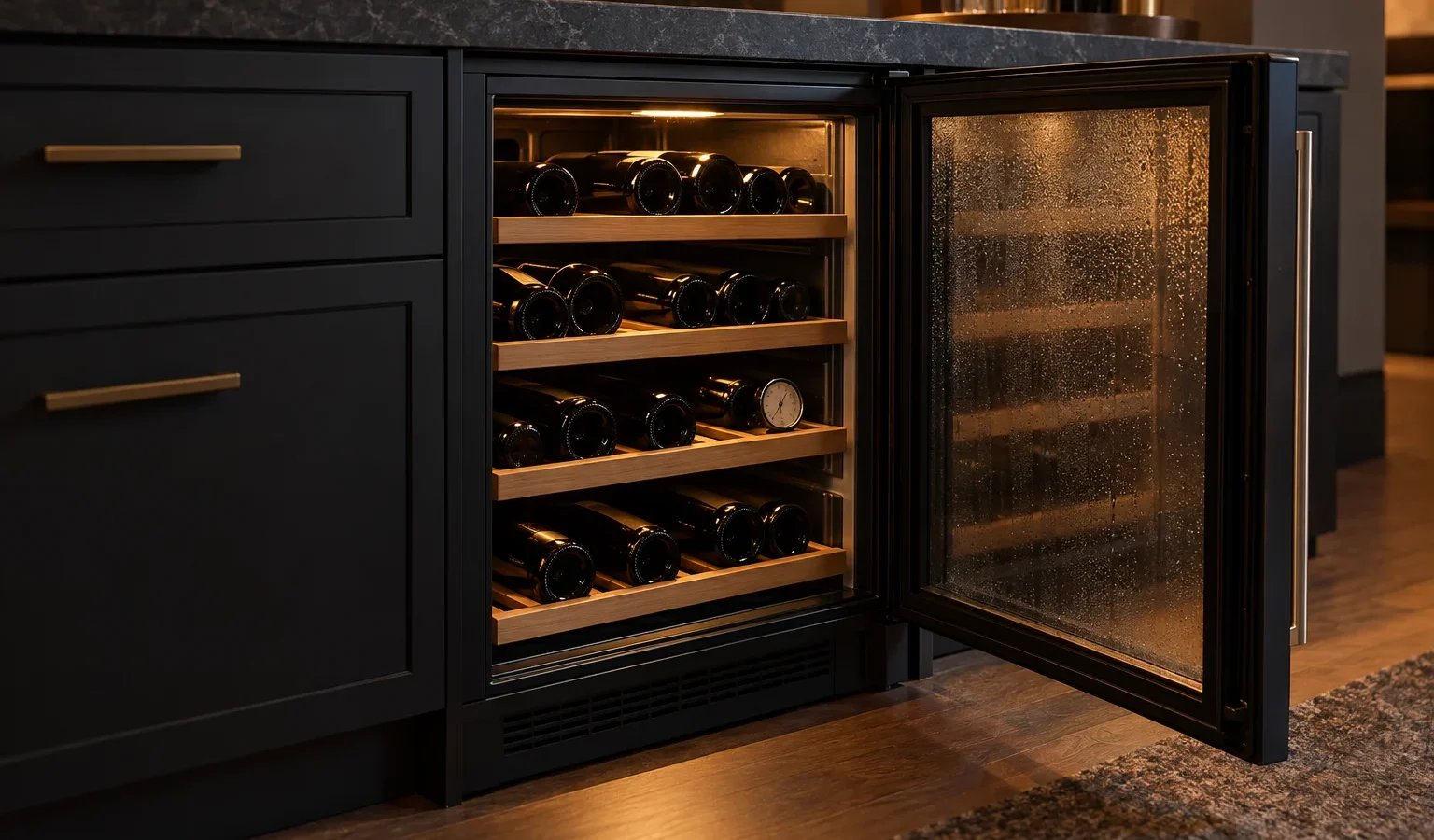
Dacor wine and beverage columns are commonly installed in a wall of cabinetry, next to a refrigerator, a pantry or a bar. Panels around the unit may have been tightened to look seamless, and in that case airflow is the first thing to check. A San Francisco condo with a built-in bar behind a closed cabinet door can trap heat so effectively that the wine column never gets a chance to keep up. If the unit sits inside a closed cabinet or under a countertop, keep the surrounding doors open while you test.
Dedicated models such as the Dacor DRW24980LAP repair wine column, the Dacor DRW24G7500 repair wine cooler and the Dacor DRR24G7400 repair beverage center are built for this kind of installation, and the same checks apply to each.
Book when power, settings, door seal and ventilation are all fine and the cabinet is still warm after a settling period. Book promptly if a collection is inside and you cannot move it, or if the unit is noisy but not cooling.
When we visit, we start with diagnosis, report what we found and put a written estimate in your hands. Nothing is repaired without your approval. If the temperature has been swinging up and down rather than staying warm, Dacor wine temperature fluctuations describes that separate pattern.
The Dacor wine cooler repair page covers the service in more detail, and the Dacor wine coolers guide describes the lineup and where the model label usually sits. If you cannot find your model, how to find your Dacor model number can help.
Wine keeps well in a stable, dark and cool place. A closet on an interior wall, away from the kitchen and from windows, works well in most Bay Area homes. Lay bottles on their sides if they have natural corks, and do not stack heavy cases on the label side. If you have a few bottles you could not bear to lose, move those first. Once the cabinet is repaired, let it return to its set temperature before reloading it, so the cooling system is not asked to chill a full load of warm bottles at once.
Sooner is better. Move valuable bottles to a cool, dark location as soon as you notice the cabinet is warm, and do not wait for the visit.
Yes. The system needs to release heat, and a blocked or dusty grille traps it. Cleaning the visible opening from outside is a safe first step.
The principle is similar, but the settings and the cabinet are different. The checks here apply to both, but the part list is not the same.
The display reports what its sensor reads. If the sensor is misreading or sits in the wrong place for the fault, the number can differ from the actual temperature of the bottles.
It helps. If you can move the bottles ahead of time, the technician can reach the interior and the back wall without handling your collection.
Share a few details and we’ll confirm an appointment. Prefer to talk? Call us and we’ll help right away.