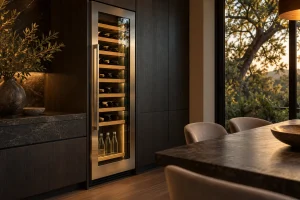
Wine and Beverage Columns
Wine columns, wine coolers, beverage centers and dispensers from Dacor, with what to check when the cellar drifts warm or the cabinet…

Specialized Dacor Appliance Repair in San Francisco
Mon–Sat: 8:00 AM – 7:00 PM
A warm glass door, a display that disagrees with the cabinet or a compressor that runs too often: we start by finding the cause.
Dacor repairSan Francisco & the Bay Area
A wine or beverage column has one job: hold a steady, cool temperature for bottles that do not tolerate swings. When it fails, the symptom is often quiet. The glass door feels a little warm, the display reads higher than you set it, or a compressor runs more often than it used to. We repair Dacor wine and beverage columns, wine coolers and wine dispensers in San Francisco and across the Bay Area.
A column that is cold on the bottom shelf and warm near the top, or warm throughout, is losing the balance between cooling and airflow. A technician looks at the fan that circulates air, the evaporator, the condenser fan and the temperature sensor before suspecting the sealed system. Our article on a Dacor wine cooler not cooling covers the first pass in more detail.
Swings of a few degrees through the day do more harm to wine than a steady setting that is a little off. If the display shows a number that does not match how the cabinet feels, the sensor, the control or the airflow may be at fault. The pattern is covered in Dacor wine temperature fluctuations.
Moisture on glass, on shelves or at the bottom of the cabinet usually points to a door gasket that no longer seals, a door that does not close fully, or a drain path that is blocked. High humidity in a fog-prone coastal neighborhood adds to it, but the fault is still in the appliance.
Bottles themselves can rattle against a shelf, and a fan can ride on a bent blade. A compressor that hums and shuts off repeatedly is a different sound from a rubbing fan, and the technician listens for which one it is.
Interior lighting that fails, a display that blanks, or a wine dispenser that will not pour all have their own diagnostic path. Dispensers add a gas or pressure side that differs from a plain cooler, so the model matters when we plan a visit.
We confirm what the cabinet is doing against what the display says, inspect the seal and the door alignment, check airflow and fans, and then work through the controls and the cooling circuit. You receive a written estimate describing the fault, and nothing is repaired without your approval. Where a unit holds a valuable collection, tell us when you book; we plan the visit so bottles are moved only when necessary.
A wine column built into cabinetry needs ventilation, and the ventilation path depends on the model. Some units breathe through a grille at the toe kick, others need open space around the cabinet. In an under-counter or tightly boxed kitchen, closing off that path leaves the compressor fighting its own heat. A wine column set into a bar in a hillside home also shifts with the building: a cabinet that has settled a few degrees out of level can leave a glass door standing slightly ajar.
The glass itself is part of the story. Glass doors let in heat from direct sun through large windows, which is common in San Francisco kitchens with a bay view. A cabinet that sits beside an oven, a dishwasher or a sunny window works harder than one in a quiet corner, and a technician takes that into account before blaming the machine. Panel-ready doors add weight that stresses the hinges.
Do not remove the rear panel, bypass the door switch or open any area near refrigerant lines. Those steps are for a technician.
If the column stays warm after the simple checks, move the bottles you care about to a cooler spot and arrange a visit. Switch off at the breaker if you smell burning or see sparks. Water on the floor beneath the unit is a reason to act: dry the area and request service so that the cabinet and flooring are not damaged.
The wine family has a few distinct designs: a column, a wine cooler, a beverage center and a wine dispenser. Our lineup includes the DRW24980LAP wine column, the DRW24G7500 wine cooler, the DRR24G7400 beverage center and the DWS4000BB wine dispenser. Parts and diagnosis differ between them, so the number saves a trip. It is usually on a label inside the cabinet; this walkthrough helps you locate it.
You tell us what you have noticed and give us the model number. The technician inspects the unit, runs a diagnosis, explains the cause and gives you a written estimate before any repair. We work Monday to Saturday, 8:00 AM to 7:00 PM, across San Francisco and the Bay Area.
The Dacor wine coolers guide outlines the family. If the wine column sits beside a refrigerator column, you can also book Dacor refrigerator repair. For general safety advice on resetting, see how to reset a Dacor appliance.
The sensor, the control or the airflow may be off. A technician compares what the display shows with the real cabinet condition before replacing anything.
Wine reacts badly to repeated swings, so an unsteady cabinet deserves attention even if the average looks fine. Move valuable bottles somewhere stable while you wait for a visit.
Often it is condensation from a gasket that no longer seals or a door that closes poorly. A blocked drain path can also be involved, and that is checked during the diagnosis.
Yes. Dispensers have a different construction from a plain cooler, so the model number helps us prepare before the visit.
Usually not. Tell us when you book, and we plan so bottles are moved only if the repair requires it.
Wine columns, wine coolers, beverage centers and dispensers from Dacor, with what to check when the cellar drifts warm or the cabinet…
Repair for Dacor gas, electric and induction cooktops and rangetops across San Francisco and the Bay Area, with diagnosis first and your…
Dacor dishwasher repair in San Francisco and the Bay Area for leaks, standing water, fill problems, heater faults and display codes in…
Repair for Dacor column freezers in San Francisco and the Bay Area: thawing food, heavy frost, drain ice and constant running, diagnosed…
Dacor ice maker repair in San Francisco and the Bay Area, covering empty bins, fused cubes, slow harvests and leaks from the…
Share a few details and we’ll confirm an appointment. Prefer to talk? Call us and we’ll help right away.