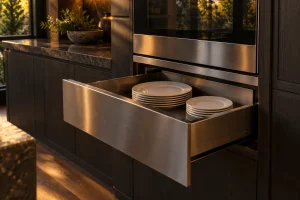
Warming Drawers
Dacor warming drawers in San Francisco homes: the 24, 27 and 30-inch models we list, where the label hides, heat and slide…

Specialized Dacor Appliance Repair in San Francisco
Mon–Sat: 8:00 AM – 7:00 PM
Plates stay cold, the drawer drags, or the control goes dark. We check the heating chain and the cabinet fit around it.
Dacor repairSan Francisco & the Bay Area
A warming drawer is the quiet appliance in a Dacor kitchen. It holds plates, bread and a finished roast at serving condition while the rest of dinner catches up, and it is usually installed flush with the cabinet fronts beneath a wall oven or microwave, or in an island where nobody sees the mechanism. When it stops working, you notice at the worst moment: the plates are cold, the indicator never lights, or the drawer will not glide shut. If you live in San Francisco or the Bay Area, we diagnose and repair it where it sits.
The control lights up, you select a setting, and after a long wait the inside is barely above room temperature. The heating element, its limit device, the temperature sensor and the control board form a short chain, and any link can break it. A technician tests the chain in order, beginning with whether power actually reaches the element. If you suspect this, our article on a Dacor warming drawer not heating lays out the reasoning in more detail.
A drawer that scorches the front edge of a plate or heats only one side points to a sensor that reads wrongly, a damaged element, or a door that does not seal along its whole length. Because food sits in these drawers for a long time, we treat overheating as a priority and not just a nuisance.
Many Dacor warming drawers are fitted behind a panel that matches the cabinets. Over time the glides collect grease and crumbs, a panel bracket loosens, or the drawer box is overloaded with heavy dishes. The result is a drawer that sits slightly open, drags on one side, or fails to trip the closing switch, so the heating never starts.
A control that is dark, a dial that spins freely, or an indicator that flashes without any heat points toward the control assembly or its wiring behind the front panel.
A warming drawer lives in a cabinet opening, and the opening affects almost everything we test. Tight cutouts limit airflow around the housing. Panel-ready fronts add weight to the drawer, which is hard on the glides. Stacking the drawer beneath a wall oven or beside a microwave drawer means heat from neighbors can influence the sensor and the ventilation around the case.
In older San Francisco flats and row houses, kitchens are often remodeled in stages, and the drawer may sit on a circuit that was never changed. We check how the drawer is supplied, whether it has a dedicated feed, and what the breaker does when the element calls for power. Hillside homes and condos with long cable runs deserve the same attention.
Never remove the drawer housing, never probe the element terminals, and do not force a stuck drawer past its stop. The element and wiring carry live current and the glide hardware can pinch.
Switch off at the breaker and stop using the drawer if you smell burning, see smoke, notice that the front or the cabinet next to it is unusually hot, or find melted plastic or scorched wood near the opening. A drawer that cycles the breaker should stay off until it has been checked. Food that has sat in a drawer that stopped heating should be treated with the same caution as food left on the counter.
Dacor has made warming drawers in several widths, and the parts that fit one will not fit another. The label is usually behind the drawer front edge or on the inside wall of the housing, and sometimes you must pull the drawer fully out to read it. Photograph it clearly.
The lineup we service includes the HWD24PS, a 24-inch warming drawer, the HWD27PS, a 27-inch one, and two 30-inch drawers, the DWR30M977WIM and the DWR30U900WM. You can browse the whole group on the Dacor warming drawers guide.
Tell us the model number, the symptom, and what you have already tried. If the drawer sits under a wall oven, mention that too, since the neighbor sometimes shares the same circuit. Our Dacor wall oven repair service covers the oven above it, and one trip can often look at both when you ask. We work across San Francisco and the surrounding Bay Area, and a note about parking or building access helps us arrive prepared.
Warm-up times vary with the setting and the load, and we do not quote a figure. If a drawer feels cold long after you would normally expect warmth, treat that as a fault and book a diagnosis.
A faint click from a relay or a soft hum from a ventilation component can be normal. Loud rattling, grinding or a smell of heat should be looked at.
You can use it as a plain storage drawer, but do not rely on it to hold food at serving condition. Have it tested before using it for that again.
A worn latch, bent glide or a loaded drawer that is out of balance can do this. We inspect the closing path and the panel fit before moving on to the heating parts.
Yes. After the diagnosis you receive a written estimate, and nothing is repaired without your approval.
Dacor warming drawers in San Francisco homes: the 24, 27 and 30-inch models we list, where the label hides, heat and slide…
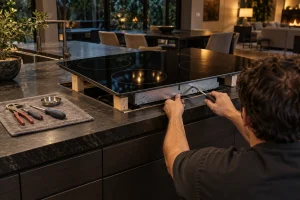
Repair for Dacor gas, electric and induction cooktops and rangetops across San Francisco and the Bay Area, with diagnosis first and your…
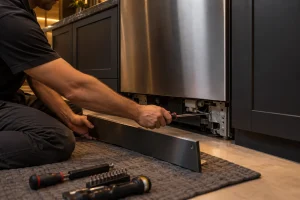
Dacor dishwasher repair in San Francisco and the Bay Area for leaks, standing water, fill problems, heater faults and display codes in…
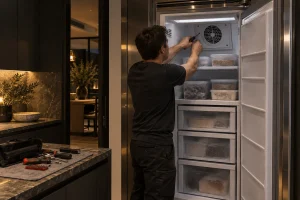
Repair for Dacor column freezers in San Francisco and the Bay Area: thawing food, heavy frost, drain ice and constant running, diagnosed…
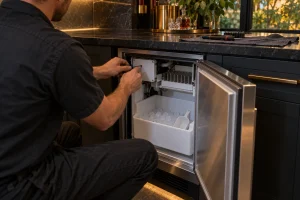
Dacor ice maker repair in San Francisco and the Bay Area, covering empty bins, fused cubes, slow harvests and leaks from the…
Share a few details and we’ll confirm an appointment. Prefer to talk? Call us and we’ll help right away.