

Specialized Dacor Appliance Repair in San Francisco
Mon–Sat: 8:00 AM – 7:00 PM
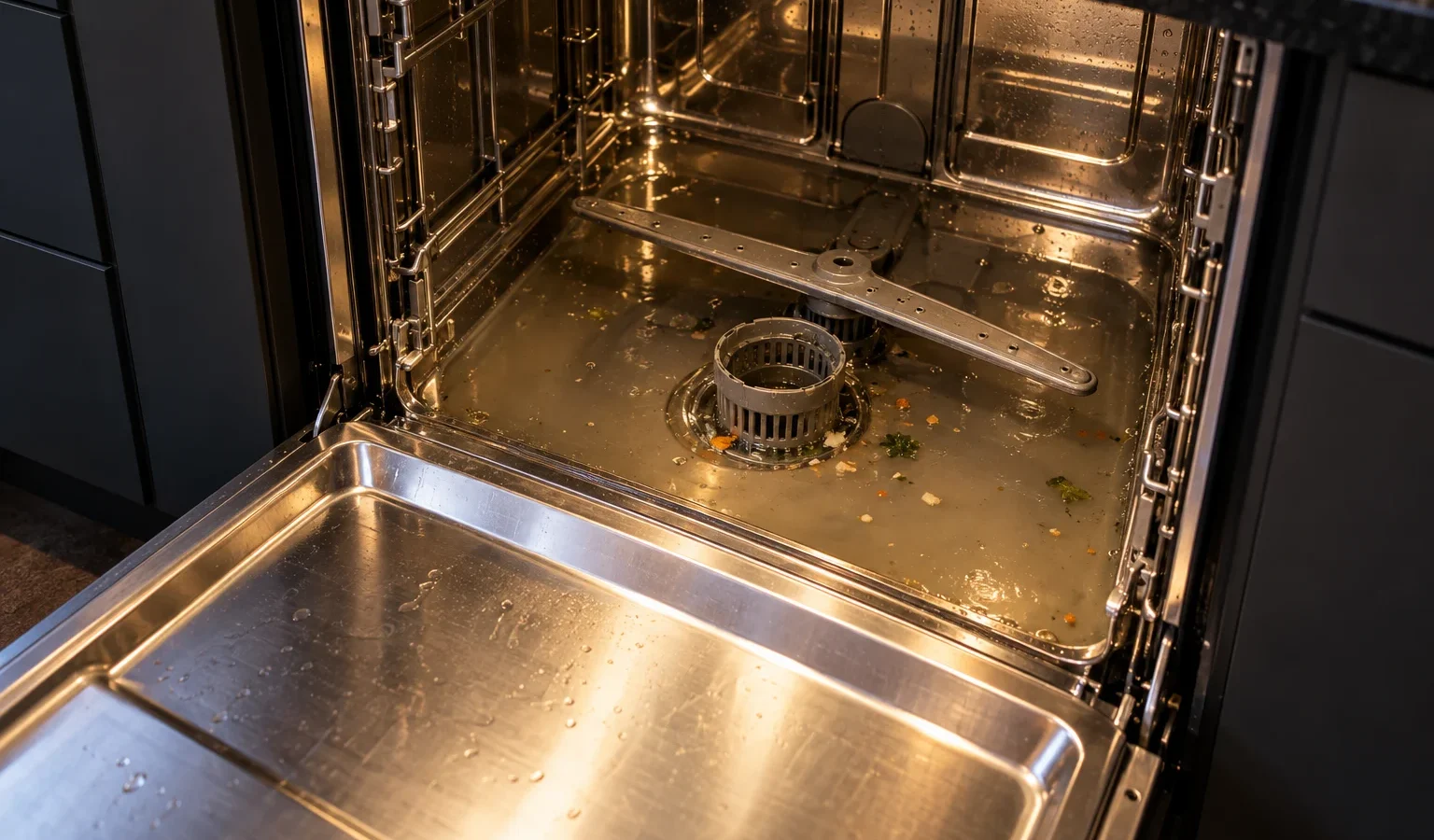
Water left in the tub after a cycle usually means the drain path is blocked or the pump is struggling. Learn what to look at and what to leave alone.
Dacor repairSan Francisco & the Bay Area
You open the door after a cycle and find a shallow pool across the tub floor, sometimes with a sour smell and a film of detergent. A Dacor dishwasher that does not drain is telling you that water went in and could not get out. The reasons range from a clogged screen to a stubborn pump, and a few of them live outside the dishwasher entirely, in the sink drain or the disposal.
Think of the drain as a short road: sump, pump, drain hose, a high loop or air gap, then the sink drain or disposal. A blockage anywhere on that road produces the same symptom, so the checks below move from the tub outward.
Food, seeds, glass fragments and the paper from a label all end up at the drain screen. When it clogs, water pools above it. This is the first thing to look at and the easiest.
The drain pump pushes water out. If it hums but nothing moves, something may be jammed in the impeller. If it does nothing at all, the pump, its wiring or the board commanding it could be at fault. That is a technician’s call.
Behind a flush-fitted dishwasher the hose is bent, tucked and sometimes crushed during installation or after a cabinet change. A kink behaves just like a failing pump. The high loop or air gap exists to stop sink water flowing back into the tub, and a poor loop is a common cause of slow draining.
If the dishwasher drains into a garbage disposal, the knockout plug left in the inlet during a new installation, or a clog beyond the disposal, can hold the water in. When the kitchen sink also drains slowly, the dishwasher is only a bystander.
On the older Epicure and Distinctive-style units, F4 is the drain pump fault: water is still detected in the sump after the drain cycle. On the newer Modernist and Heritage-style units, 5C is the drain check. A related pump entry is 3C, the pump operation check. For a wider view of the code families, our Dacor dishwasher error codes guide lays them side by side.
Do not reach into the sump past the screen, do not pull the unit out while it is connected, and do not pour drain cleaners into the tub. Those chemicals sit in standing water and damage seals.
Many San Francisco kitchens are small galley layouts where the dishwasher shares a wall with the sink and a disposal. The drain connection is only inches from the dishwasher, so a disposal installed during a remodel without removing the plug, or a disposal that backs up after a long period of non-use, is a real possibility. Older buildings may also carry narrow shared drain lines. A technician will check where the dishwasher connects before deciding whether the pump is at fault.
Standing water is not just unpleasant. It sits against the tub and the door seal, it lets odors build, and it can mean the next cycle starts with a tub that is already part full, which makes overflow more likely. If the water has been in the tub for days, do not run another cycle to flush it out.
Book a visit if the screen is clean and the sink drains normally, if F4 or 5C returns after a reset, or if you hear the pump run without moving water. A technician will test the pump and the path after it, report what was found and give you a written estimate before anything is done. Nothing is repaired without your approval.
See the Dacor dishwasher repair page for how we work, the Dacor dishwashers guide for the lineup, and the Dacor dishwasher leaking article if the water has also reached the floor. Specific units are covered on the Dacor DDW24G9000AP repair and Dacor EDWH24S repair pages.
What you hear during the failed drain is a clue. A pump that runs loudly and moves nothing suggests a jam or a blocked hose. A pump that stays silent suggests no command or no power reaching it. A gurgle from the sink while the dishwasher drains points at the disposal or the shared drain. Tell the technician what you heard, as it narrows the first test and keeps the visit short.
Not every drain problem triggers a code. A partly blocked screen or hose leaves water behind without a fault being logged. Check the screen and the hose first.
It means water was still detected in the sump after the drain cycle. The cause may be the pump, but it may also be a blocked hose or sink drain, which is why a technician checks the whole path.
No. Chemical cleaners sit in the standing water and can harm seals and plastic parts. Clear the screen by hand instead.
Slow draining usually points at a partial blockage in the screen, hose or disposal connection, not a dead pump.
It can be. If the sink also drains slowly, the problem is beyond the dishwasher, and a plumber may be needed before the machine is looked at.
Share a few details and we’ll confirm an appointment. Prefer to talk? Call us and we’ll help right away.